|
|
Comparison of Reserves on Different Interest Bases and on Different Policies
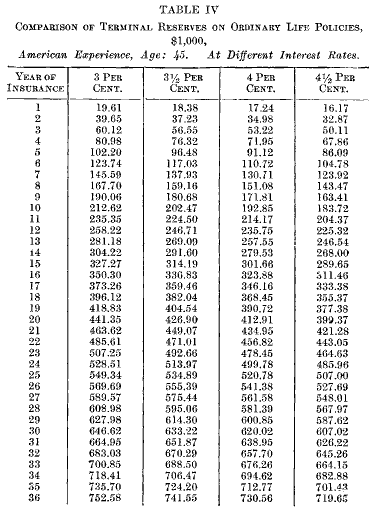
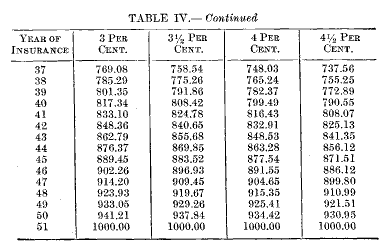
Instructive comparisons may be made of reserves computed on different interest bases to show the importance of the interest rate used and its effect on the size of the reserve. TABLE IV COMPARISON OF TERMINAL RESERVES ON ORDINARY LIFE POLICIES, $1,000/
Table IV shows the reserves on an ordinary life policy for $1,000 issued at age 45 and paid for by annual premiums, when computed on four different interest bases, viz, 3, 3½, 4, and 4½ percent. The table shows that the lower interest rate invariably requires a higher reserve and this is true for every year during the life of the policy. The difference for instance between the 3 percent, and the 4½ percent, reserve is $28.90 in the tenth year of insurance and reaches the maximum figure, viz, $42.62, in the twenty-third year. After the latter date the larger interest earnings credited to the policy gradually bring the two reserves nearer together and they finally equal each other at the end of age 95 when all reserves on whatever interest basis determined equal the face value of the policy. The history of the rate of interest used by life-insurance companies in the United States for the calculation of premiums and reserves is interesting. In the early days of life insurance a 4 percent, rate was commonly used. This was later changed and 3% percent, became the standard. This standard is required to-day by most state laws for determining minimum reserve requirements, but a great number of companies have changed to a 3 percent, basis since about 1900. This means that these companies are carrying a larger reserve than required by law but it means also that they are operating on a very safe basis arid an unusual reduction in their interest earnings must occur before the failure of actual interest earned to equal expected interest income would render such companies insolvent. TABLE V
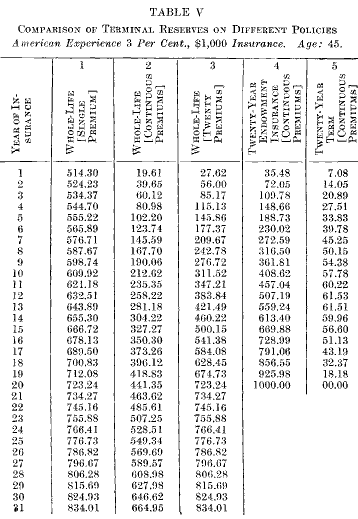
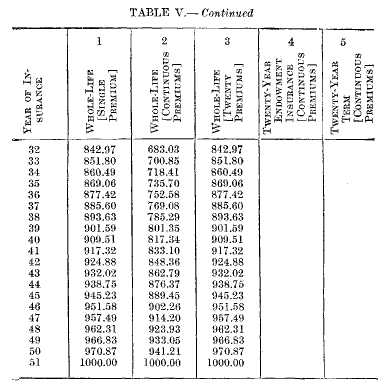
Table V affords comparisons of the reserves on different kinds of policies issued at the same age. Single and annual premium reserves have already been compared but no reference has been made to reserves on limited-payment life, endowment or term policies. Column 3 of the table shows that the reserves on a life policy paid for by twenty annual premiums increase much more rapidly than in case of premiums paid continuously throughout life, and in the twentieth year of insurance the reserve on the limited-premium policy is identical with the single-premium reserve. This is necessary, of course, since the insured cannot be required to make further premium advances after this date, and to guarantee solvency the reserve must, therefore, be of an amount sufficient in itself to pay all future claims accruing against the policy. The reserve on the twenty-year endowment insurance is largest of all and becomes $1,000 at the end of the twenty years. This shows how it is possible under such a policy to guarantee to pay the face value whether the insured be living or dead, for at the expiration of the designated endowment period an amount equal to the face value of the policy stands to the credit of the insured. The reserve on the twenty-year term policy is at all times small, and reaches its maximum at the end of the twelfth year; thereafter it decreases until at the end of the twentieth year it is entirely exhausted. An interesting contrast is thus afforded between the term and the endowment policies. The latter guarantees to pay the face value of the policy at some time and therefore, in case death does not occur before the twenty years have elapsed, accumulates the amount payable. The term policy on the other hand promises the face value only in case of death within the twenty-year term, and at the close of this period the policy value is entirety exhausted and nothing will be paid to the policy-holder. |
|